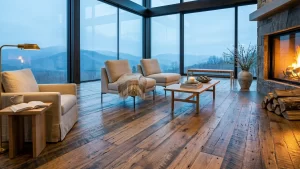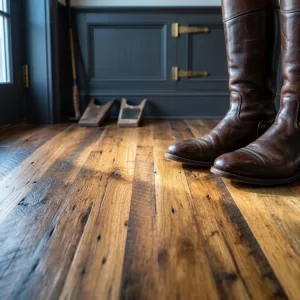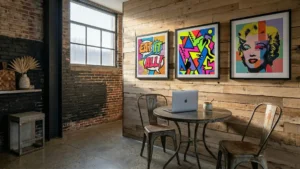
Biophilic interior design relies on natural, minimally processed materials to actively improve human health and connect indoor spaces to the natural world. It serves as the structural antidote to ultra-processed modern architecture, systematically replacing synthetic, VOC-emitting composites with breathable, authentic elements like solid reclaimed wood to lower physiological stress and create visually grounded environments.
Biophilic Interior Design: The Organic Modern Antidote to Ultra-Processed Architecture
Contents

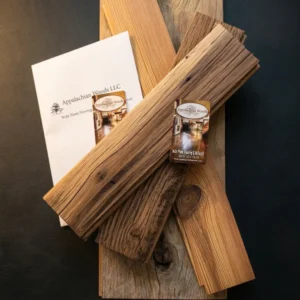
Curate Your Sample Box
Experience the tactile history of the Shenandoah Valley in your own studio.
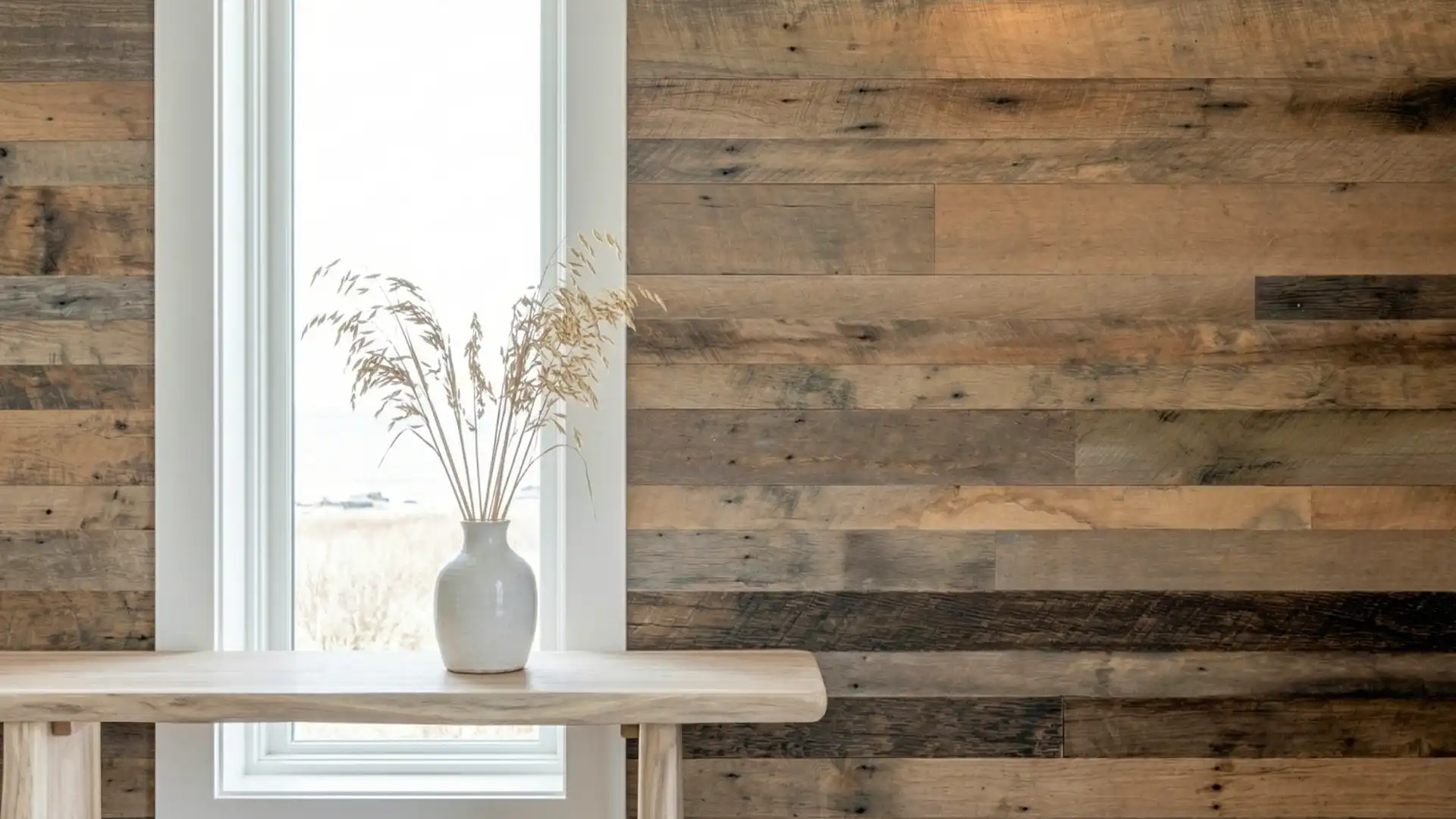
What defines biophilic interior design in modern architecture?
The modern built environment has a material problem. We are increasingly encasing our daily lives in “ultra-processed architecture”—a design trajectory dominated by chemically engineered, highly synthetic materials. Just as ultra-processed foods dismantle natural matrices to reassemble them with synthetic additives, ultra-processed interiors replace raw bio-materials with plastic facsimiles, volatile binders, and wrapped composite joinery. Biophilic interior design directly opposes this synthetic saturation by prioritizing an evolutionary human affinity for natural systems, biological geometries, and organic material textures.
HERITAGE NOTE
Just as ultra-processed foods dismantle natural matrices to reassemble them with synthetic additives, ultra-processed interiors replace raw bio-materials with plastic facsimiles...
The impact of this approach goes far beyond aesthetics; it is a measurable biological intervention. Empirical research led by Dr. David Fell at FPInnovations demonstrates that direct visual and tactile exposure to indoor wood actively modulates the human autonomic nervous system. As outlined in the comprehensive study Wood as a Restorative Material in Healthcare Environments, introducing solid wood surfaces into a room yields continuous restorative physiological effects.
While synthetic environments trigger low-grade physiological stress, people placed in wood-rich interiors exhibit statistically significant reductions in sympathetic nervous system activation. That means lowered blood pressure, stabilized heart rate variability, and suppressed salivary cortisol concentrations. Ultimately, designing with authentic natural materials shifts the central nervous system toward physiological relaxation, cutting down on cognitive overload and sensory fatigue.
Why reclaimed wood is the foundation of organic modern interior design
The surging demand for Organic Modern interior design is a direct reaction against the flawless, artificial surfaces that have flooded the housing market. Factory-extruded luxury vinyl tiles (LVT) and printed porcelain attempt to replicate wood grain, but this digital perfection inevitably creates sensory monotony.
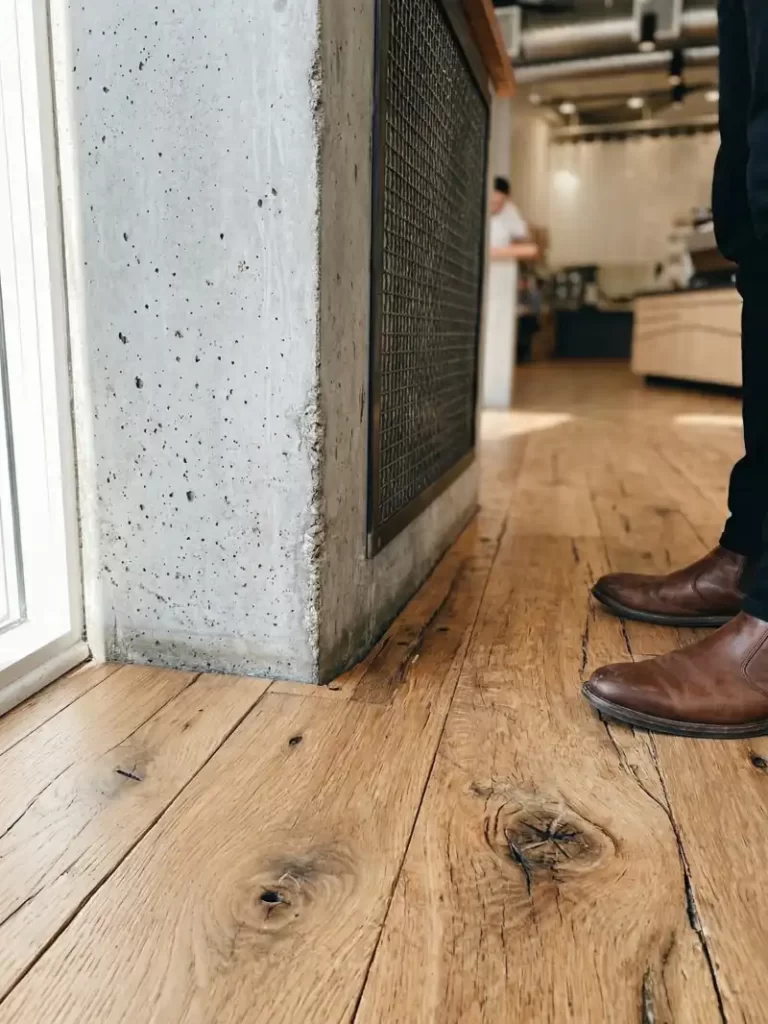
We also have to look honestly at modern engineered wood flooring. While the engineered flooring industry has undeniably improved its off-gassing profiles over the last twenty years, these products still fundamentally rely on layered plies bound together by synthetic glues and resins. Solid reclaimed wood planks completely eliminate those chemical layers. There is no hidden adhesive core; it is simply 100% solid, unadulterated timber from top to bottom.
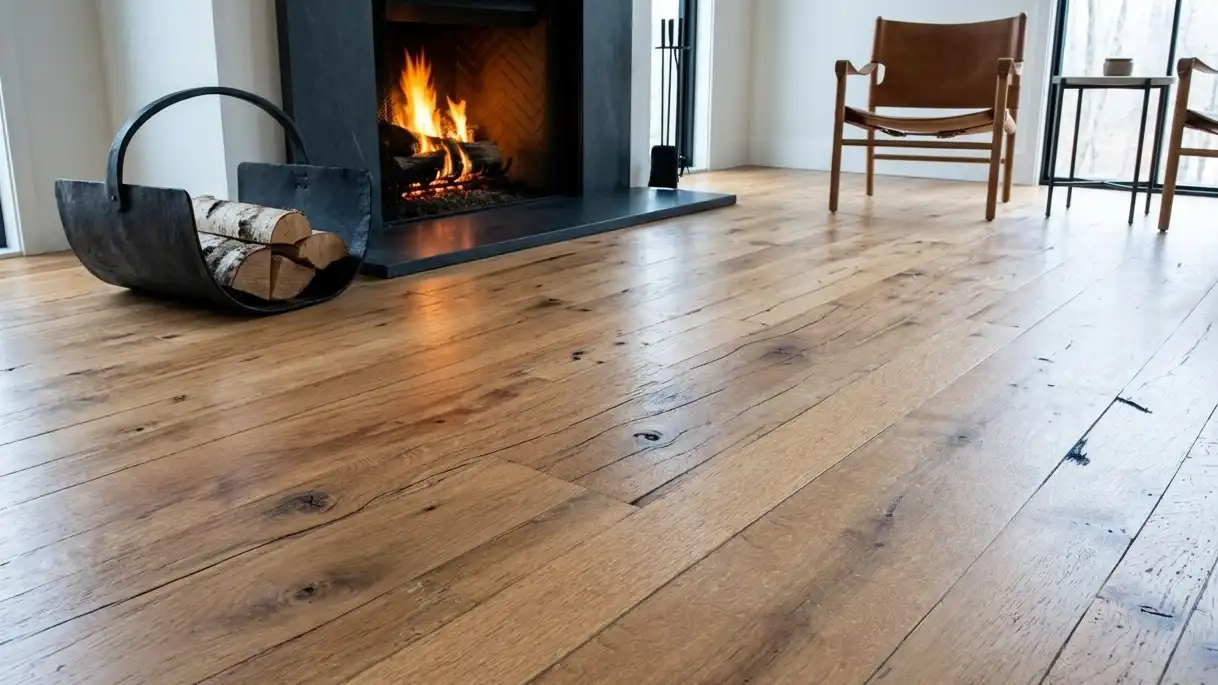
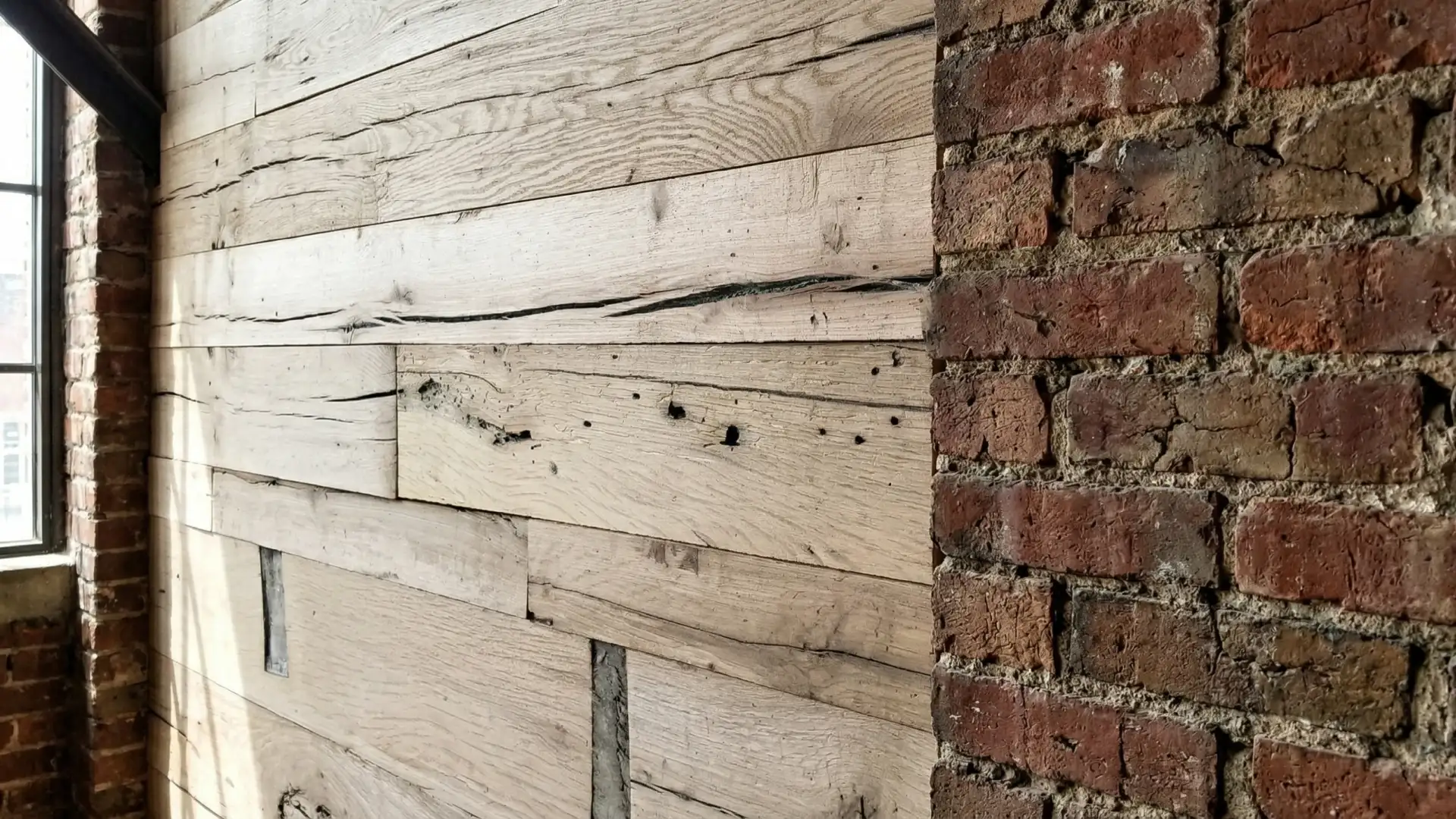
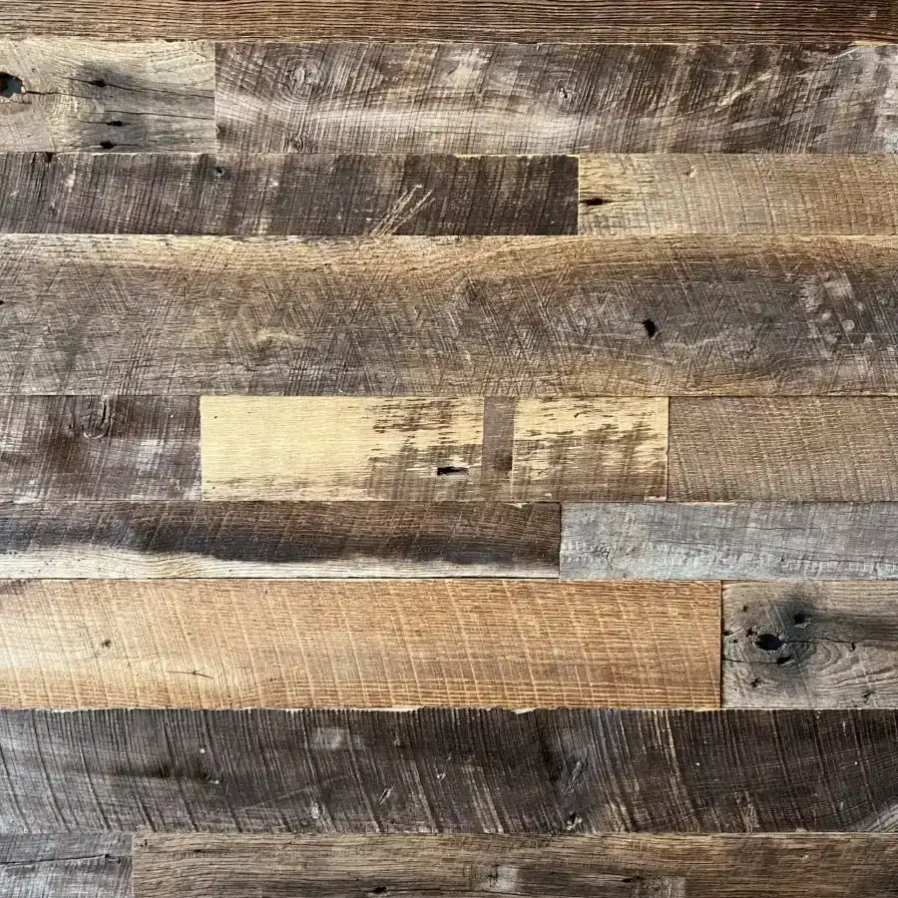
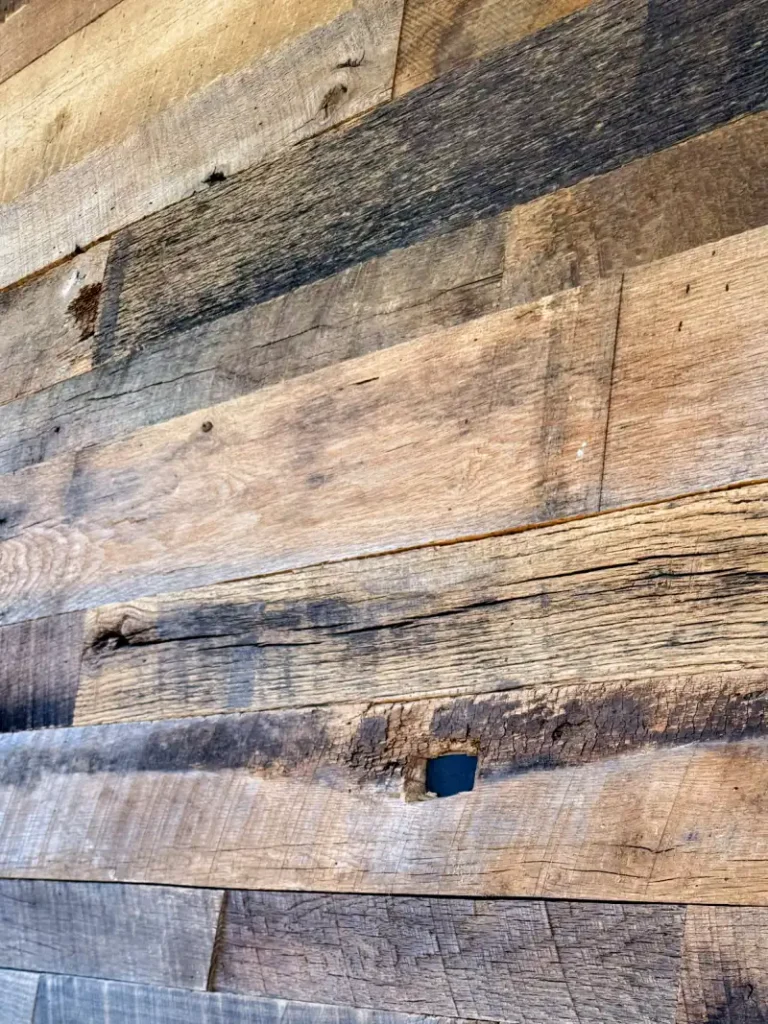
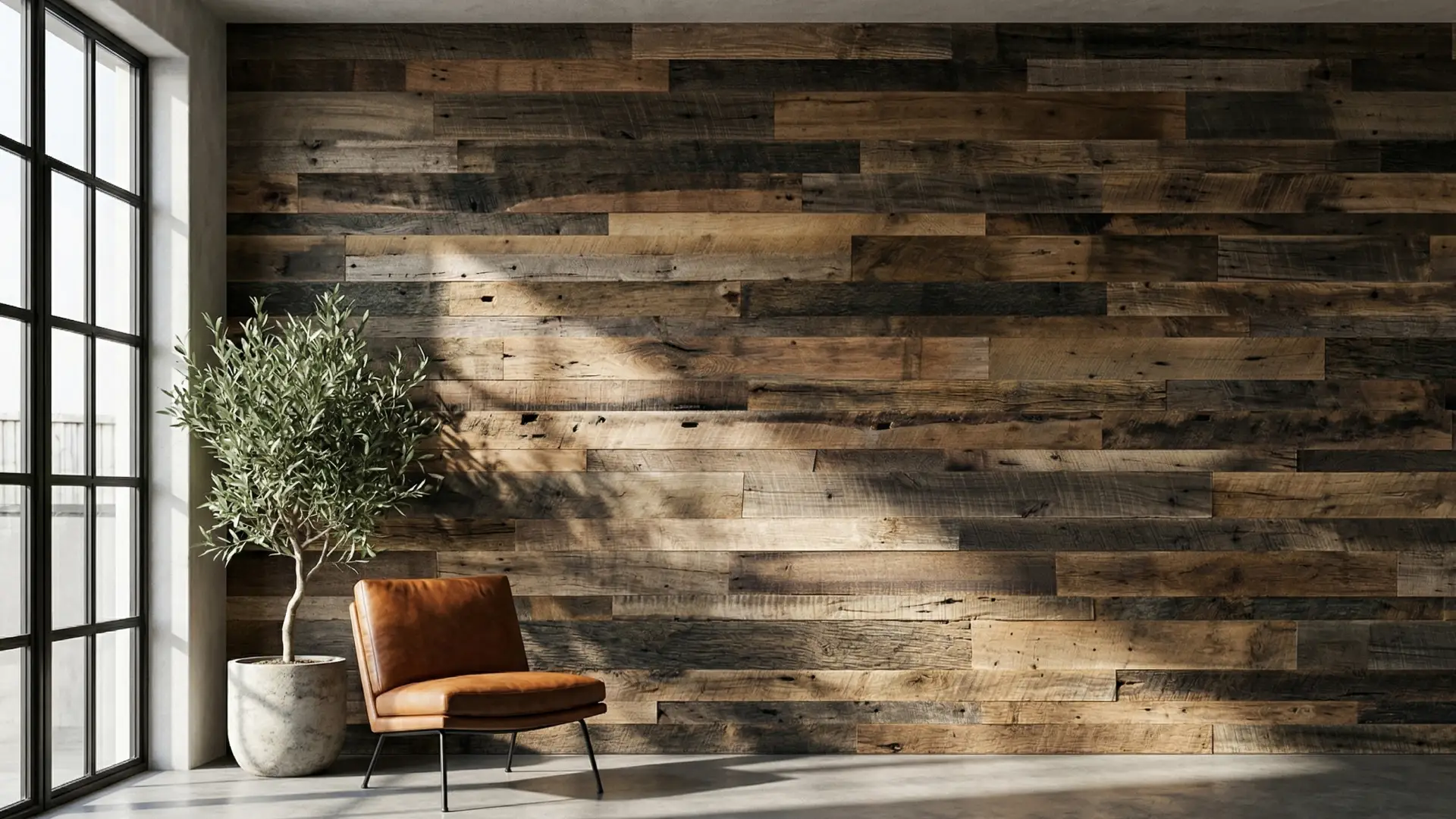
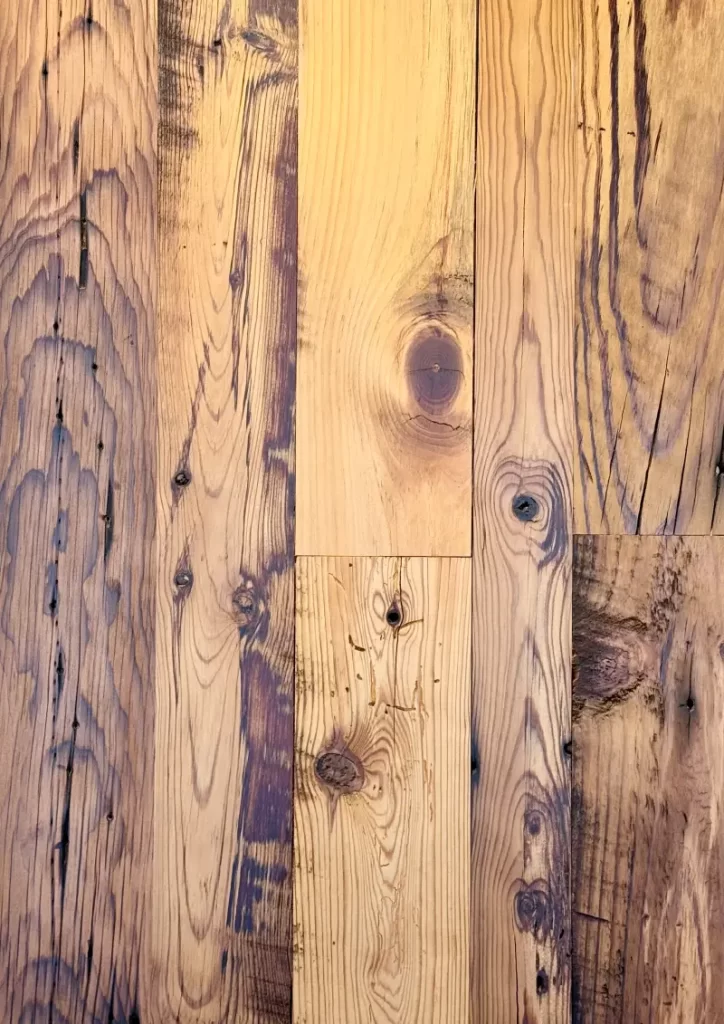
This difference becomes undeniable the moment you physically interact with the material. Consider our Antique Beam-Sawn Oak. Because it is milled directly from the interior of 100+ year-old structural barn beams, it yields a clean, refined, old-growth grain with no exterior patina. That dense, physical grounding cannot be extruded in a factory or printed on a plastic wear layer.
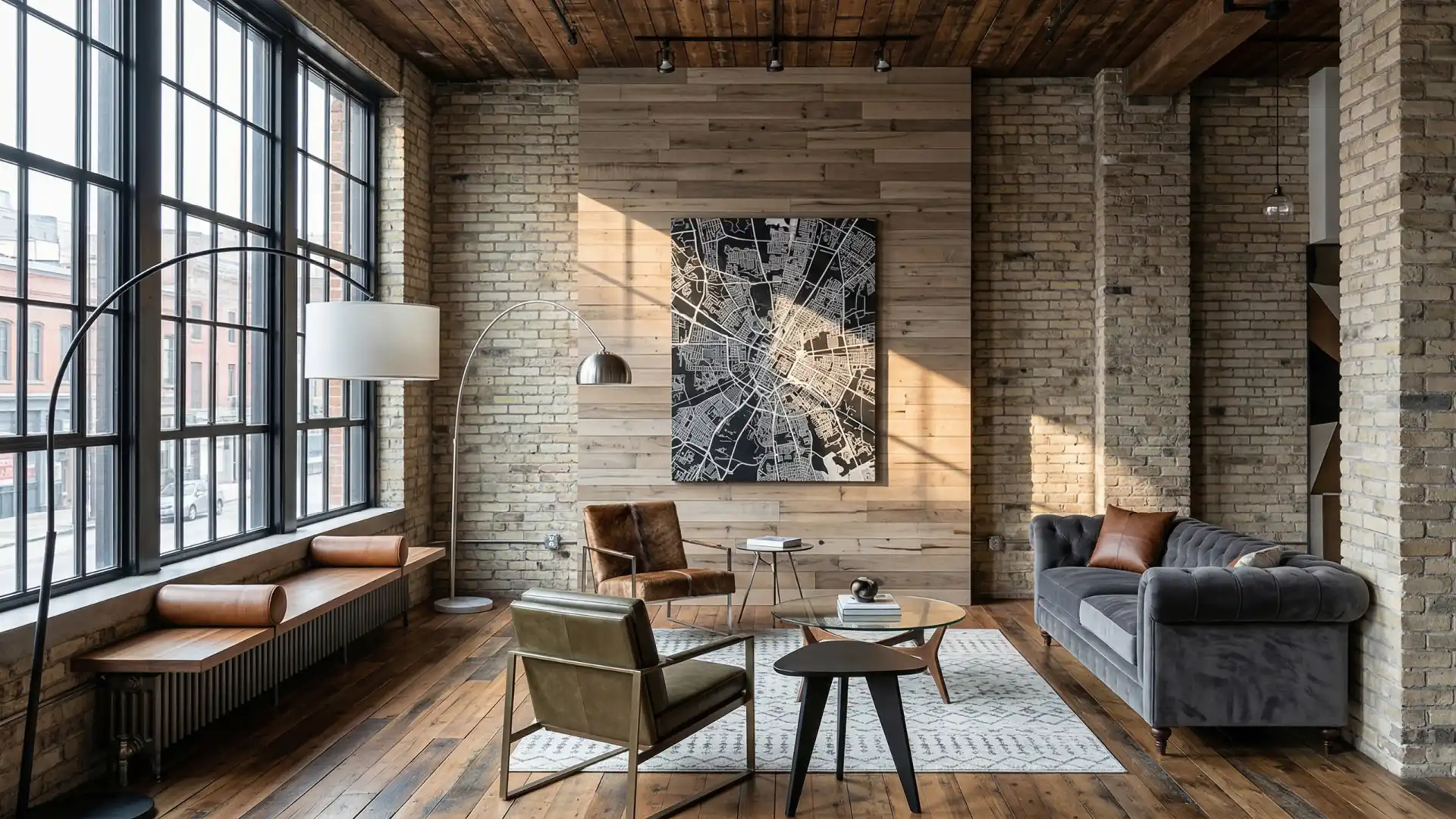
As AW head of manufacturing Jason Hochstetler advises architects, “When you specify genuine antique timber over a synthetic LVT substitute, you are securing true organic modern texture. Unlacquered solid wood builds an authentic patina that plastic replicas simply cannot match.”
HERITAGE NOTE
Designing with authentic natural materials shifts the central nervous system toward physiological relaxation, cutting down on cognitive overload and sensory fatigue.
How does biophilic interior design improve indoor environmental quality?
The health hazards hiding in ultra-processed interiors come directly from the chemical volatility and material degradation of synthetic products. According to data compiled by the Healthy Building Network, synthetic building composites, luxury vinyl tiles, and formaldehyde-based resins rely on complex chemical additives that continually off-gas volatile organic compounds (VOCs) and semi-volatile organic compounds (SVOCs). The result? You end up living and breathing in a chemically complex indoor microclimate.
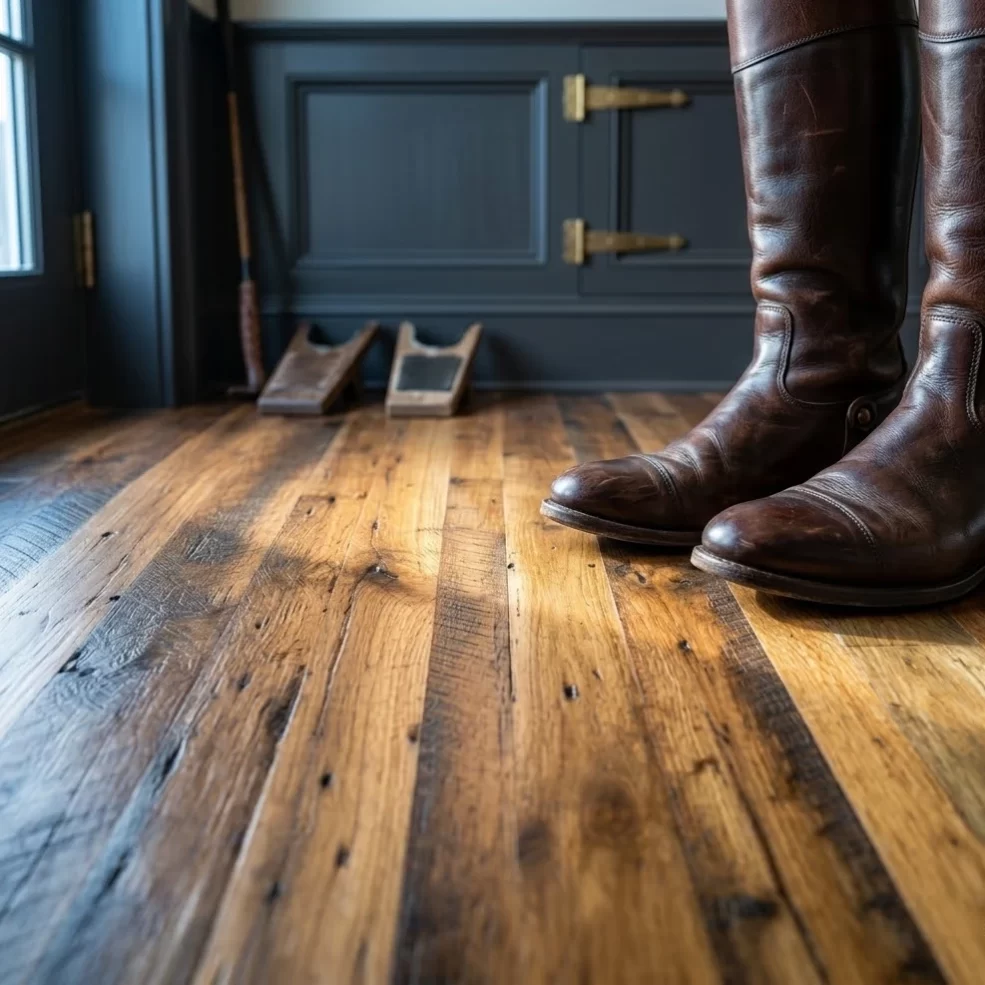
By utilizing solid natural hardwood and unvarnished structural timber framing, designers eliminate the dominant pathways of indoor chemical contamination. Solid wood acts as a breathable, passive microclimate regulator. When finished with natural plant oils rather than high-gloss polyurethane lacquers, reclaimed wood prevents the intermittent prefrontal cortical arousal driven by sensory monotony and chemical overload. In practice, specifying raw, unpatinated materials fosters emotional connections between occupants and their physical surroundings while safeguarding long-term respiratory and endocrine health.
HERITAGE NOTE
While synthetic composites carry high embodied carbon and accelerate landfill waste, solid wood surfaces can be sanded, repaired, and refinished across multi-decade lifecycles.
Specifying reclaimed wood for LEED v5 embodied carbon credits
Even with the clear health benefits of solid wood, I see the same barrier on projects all the time: “value engineering”. This commercial practice replaces specified solid hardwoods with cheaper synthetic composites to cut upfront costs. But this short-sighted approach ignores the massive long-term carbon costs. While synthetic composites carry high embodied carbon and accelerate landfill waste due to un-recyclable chemical binders, solid wood surfaces can be sanded, repaired, and refinished across multi-decade lifecycles.
At Appalachian Woods, we see the structural superiority of heritage timber every day on the milling floor. On a typical dismantled 19th-century Appalachian barn beam, we recover roughly 60% usable wood after metal extraction and milling. Some of the antique heart pine we mill is incredibly dense, averaging 18 to 28 rings per inch. While not every piece of heart pine is quite that tight-grained, it consistently outclasses modern plantation pine, which averages a mere 4 to 6 rings per inch. This density translates directly to generational durability and dimensional stability.
For architects seeking to meet USGBC LEED v5 embodied carbon baselines, specifying minimally processed timber significantly reduces industrial carbon footprints. Furthermore, adhering to National Wood Flooring Association (NWFA) installation standards ensures that these century-old materials will continue to perform flawlessly for generations to come, proving that sustainable biophilic design is both an environmental and financial imperative.
Common questions about biophilic interior design
What are examples of biophilic design materials? Core biophilic materials include solid timber, mass timber (CLT), unpainted lime, internal clay renders, raw quarry marble, and solid natural hardwood. These minimally processed bio-based materials provide visual complexity and tactile grounding without emitting synthetic chemicals.
Is reclaimed wood used in organic modern interior design? Yes, reclaimed wood is a foundational element of organic modern design. It provides the authentic, natural patina, biological graining, and tactile warmth required to contrast with clean, contemporary architectural lines, avoiding the sensory monotony of mass-produced synthetic replicas.
How does biophilic wood design improve indoor environmental quality? Solid wood eliminates the off-gassing of volatile organic compounds (VOCs) associated with synthetic plastics and glues. Additionally, unsealed wood on walls or ceilings and natural plasters act as passive humidity regulators, absorbing surplus indoor moisture and releasing it naturally to stabilize the indoor microclimate.
What are LEED v5 embodied carbon credits for reclaimed wood? Reclaimed wood scores highly for LEED v5 embodied carbon credits because it bypasses the energy-intensive extraction and manufacturing processes of new materials. Reusing 19th-century structural timber sequesters existing carbon while keeping non-recyclable synthetic building materials out of landfills.
Related products and resources from Appalachian Woods
- Antique Beam-Sawn Oak Wall Paneling
- Antique Beam-Sawn Oak Flooring
- Commercial Reclaimed Wood: 5 Rules for Material Honesty
- Is Reclaimed Wood Sustainable?