
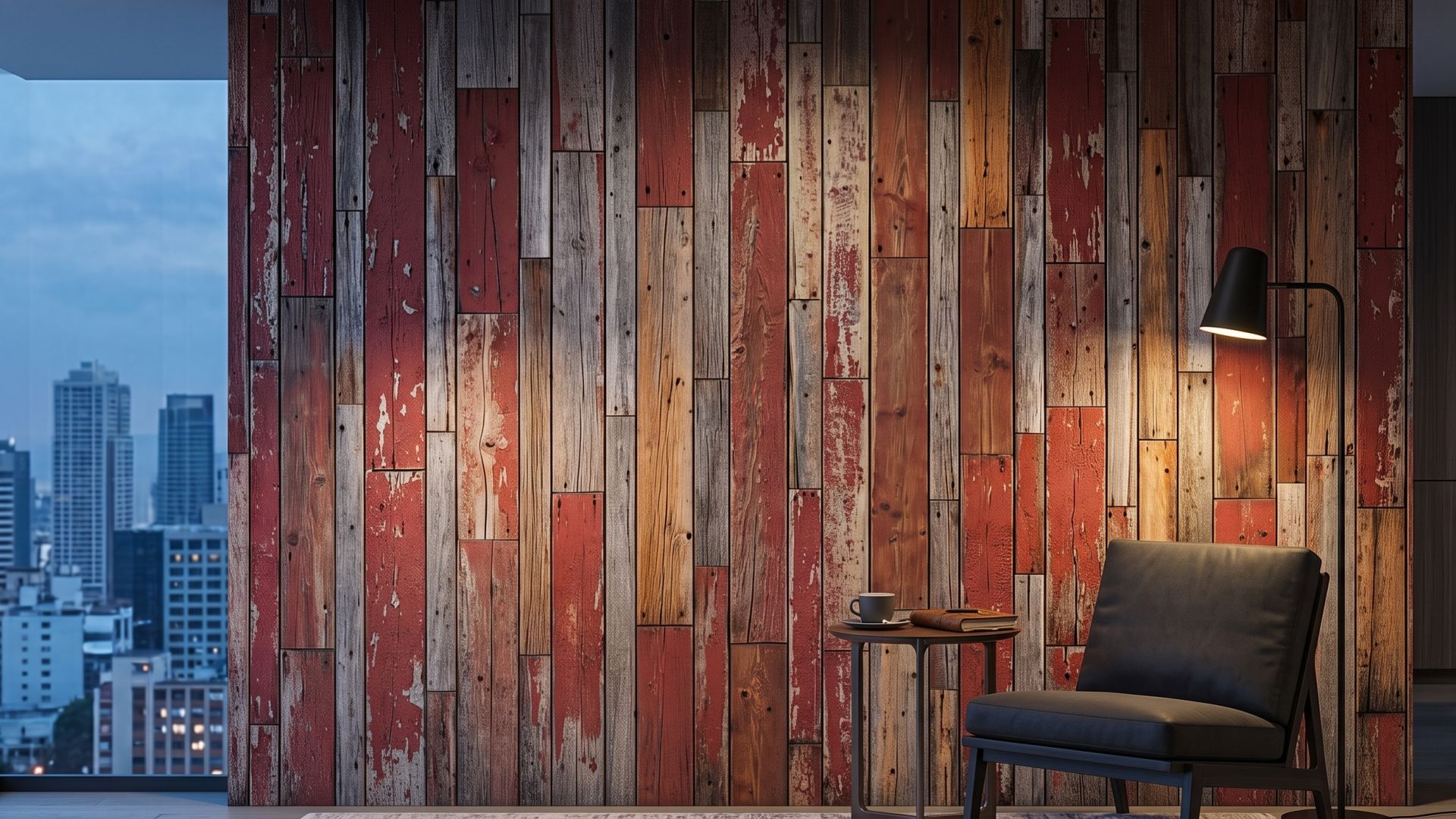
Painted Barn Siding Wall Planks
Vintage Faded Paint
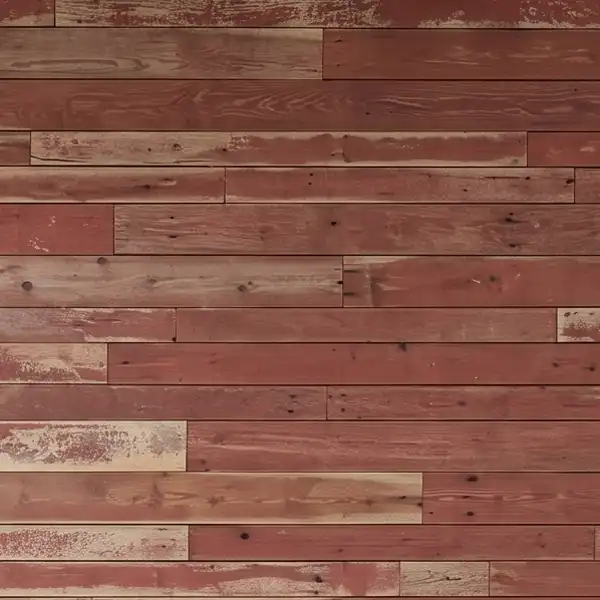
Reclaimed from barns built in the 1800s and early 1900s, our reclaimed Painted Barn Siding offers a mixed-species selection prized for its time-worn painted surfaces, from faded red to faded white.
- Species: Curated Mixed-Species (Oak, Pine, Poplar, Ash ...)
- Source: Salvaged from 19th & 20th Century Barns
- Face Grade: Original barn siding planks with authentic character and a storied, tactile patina.
- Color Profile: Faded red or faded white
- Widths: Random Mix of 3"-5"
- Thickness: ~1/2"
- Length: Random 1′ – 7’+
- Milling: Ripped 2 Edges
- Finish: Unfinished
- Shipping: Nationwide Jobsite Delivery
- Price: $9.50
- Current Lead Time: 4–6 weeks (Expedited options available)

Reclaimed Barn Siding: An Earthen Legacy
Painted History, Atmospheric Warmth
Our Painted Barn Siding earned its character the honest way — through decades of Virginia seasons. Sun and storms gradually wore the original paint into soft grays, silvered whitewash, and rich, faded reds, creating a living patina that simply cannot be manufactured. Prepared with care in our Staunton shop, each plank offers a high-character surface that balances authentic age with refined, contemporary design.
Defining the Character
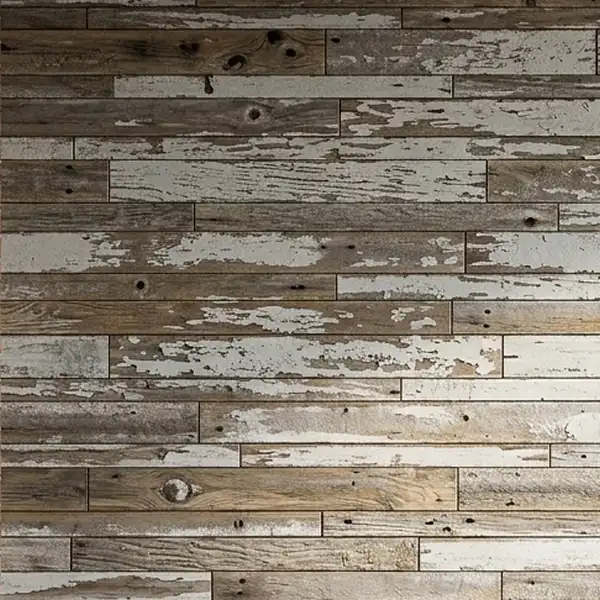
The Tactile Finish
Our Painted Barn Siding offers an authentic connection to the working barns of yesteryear. Shaped by a century of sun, wind, and rain, each plank carries a genuinely weathered surface — original paint worn soft in places, it’s a surface meant to be experienced up close, inviting the hand to trace the faded grays, silvered whitewash, and time-worn reds written into every board.
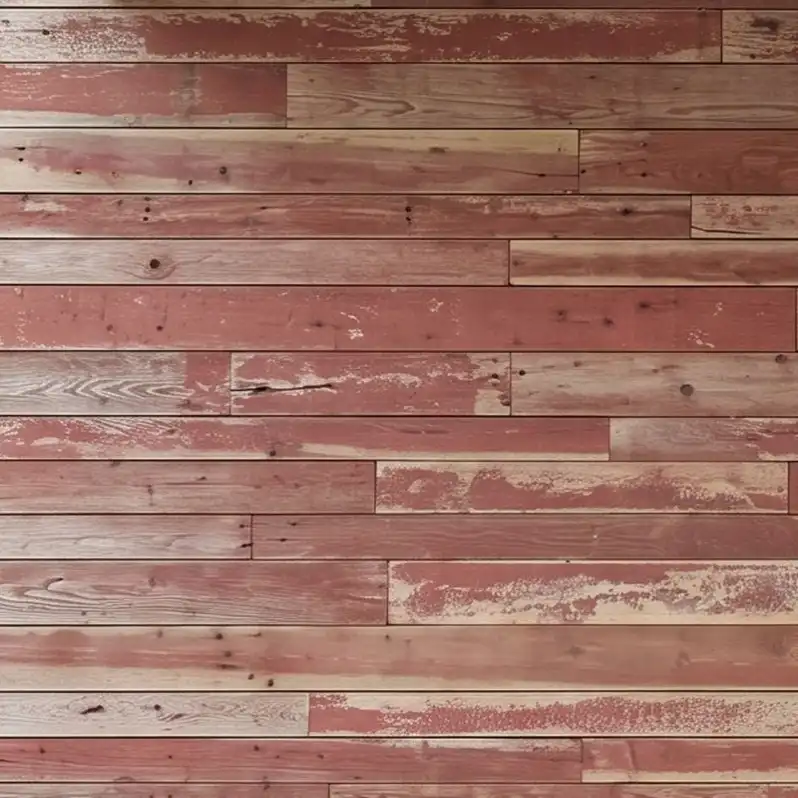
Original Fastener Marks
Long before these boards were wall planks, hand-driven iron nails held them fast against a century of Virginia weather. The blackened staining and original nail holes they left behind are preserved intentionally, grounding your painted siding in its working past. These are the marks of a previous life — small, honest details that set true reclaimed wood apart from anything manufactured
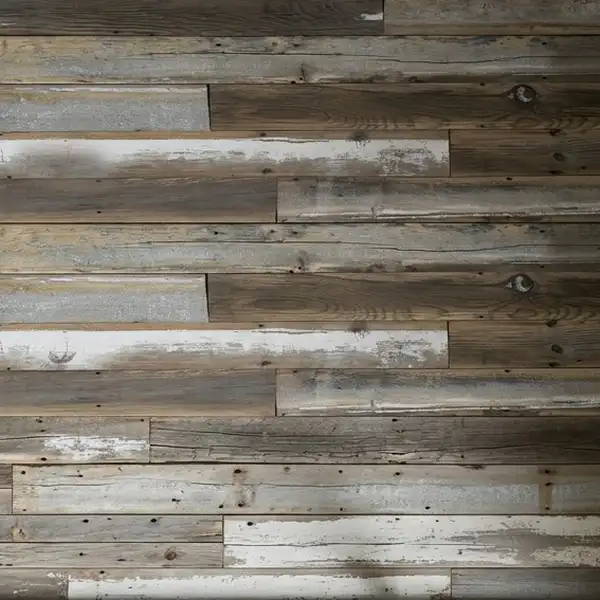
INSECT SCARS & WORM HOLES
Often referred to as the “natural script” of the forest, these tiny pinholes and worm tracks are authentic records of the wood’s organic life cycle. These markings are a primary indicator of genuine barn wood. Rather than a defect, these subtle scars provide the intricate, high-character texture that proves the biological history of our reclaimed barn siding, adding a layer of unmistakable reclaimed character to your wall cladding.
SOUND KNOTS & NATURAL VOIDS
Every knot is a record of a branch — the point where limb met trunk while the tree was still growing. This siding carries a generous share of solid, stable knots alongside natural voids, all softened by a century of weather and framed by original faded paint. If your design calls for a more refined surface, voids fill easily during installation without sacrificing the plank’s timeworn color and character.
In Its Element
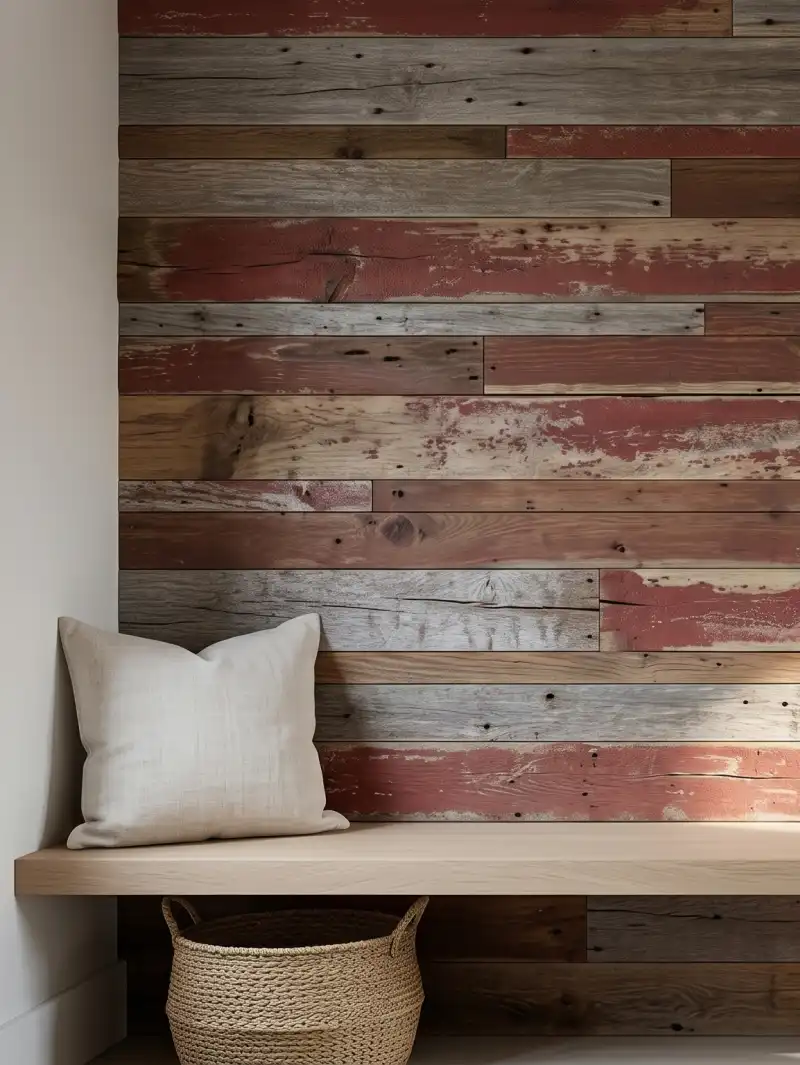
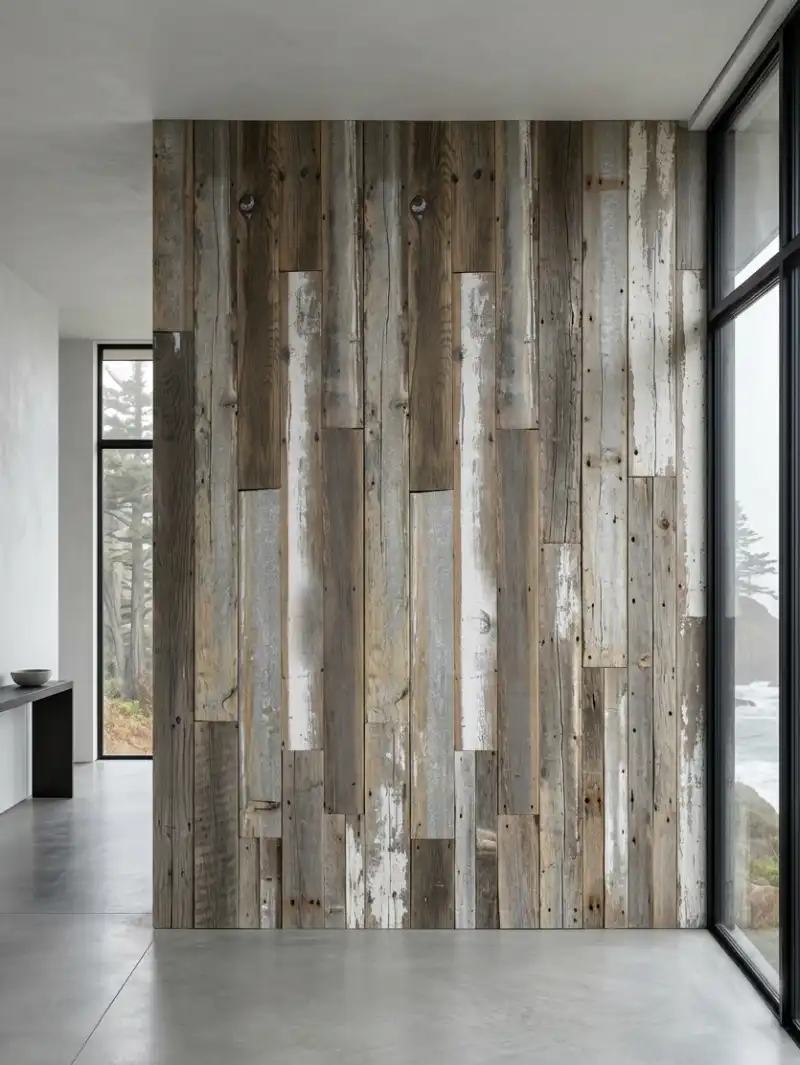
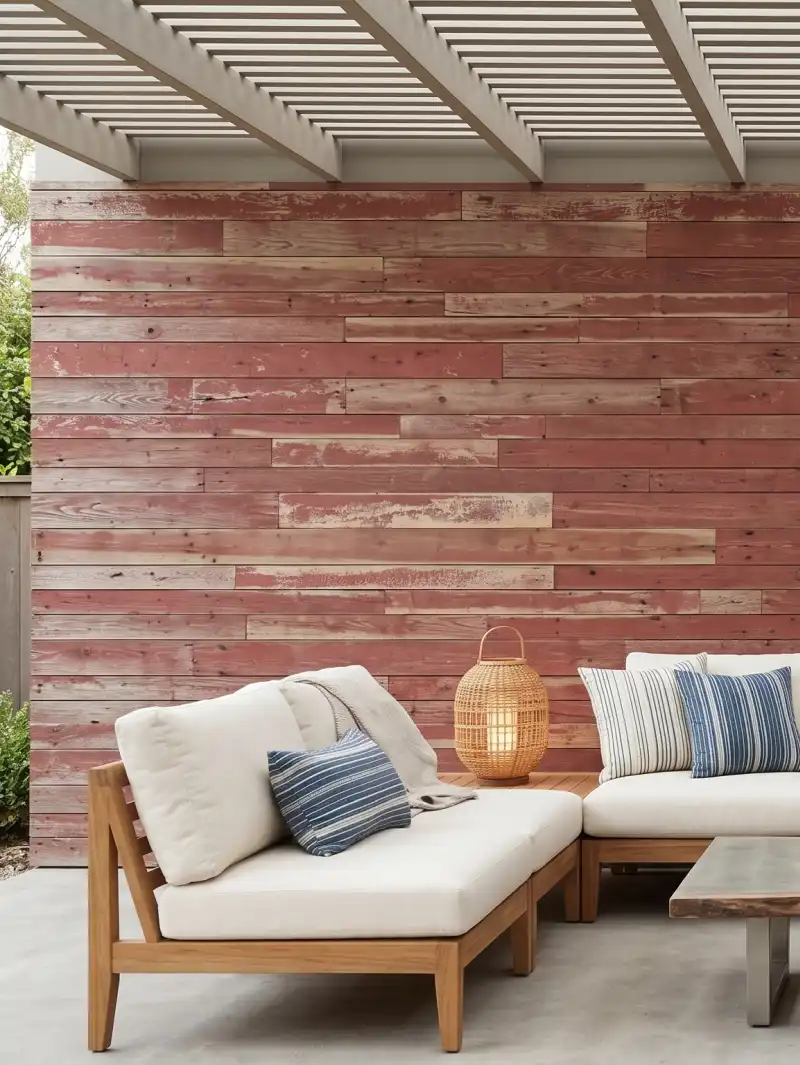
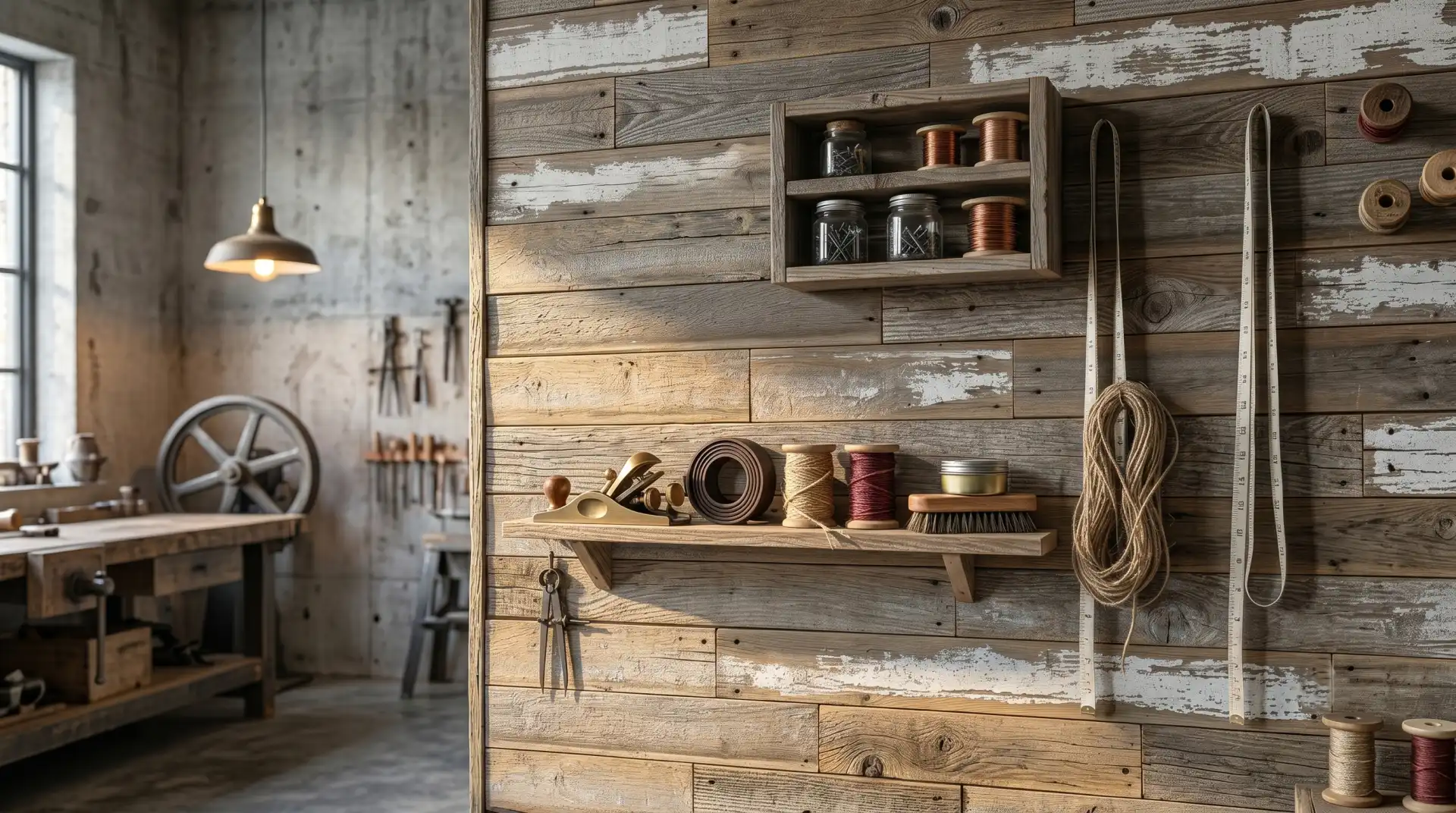
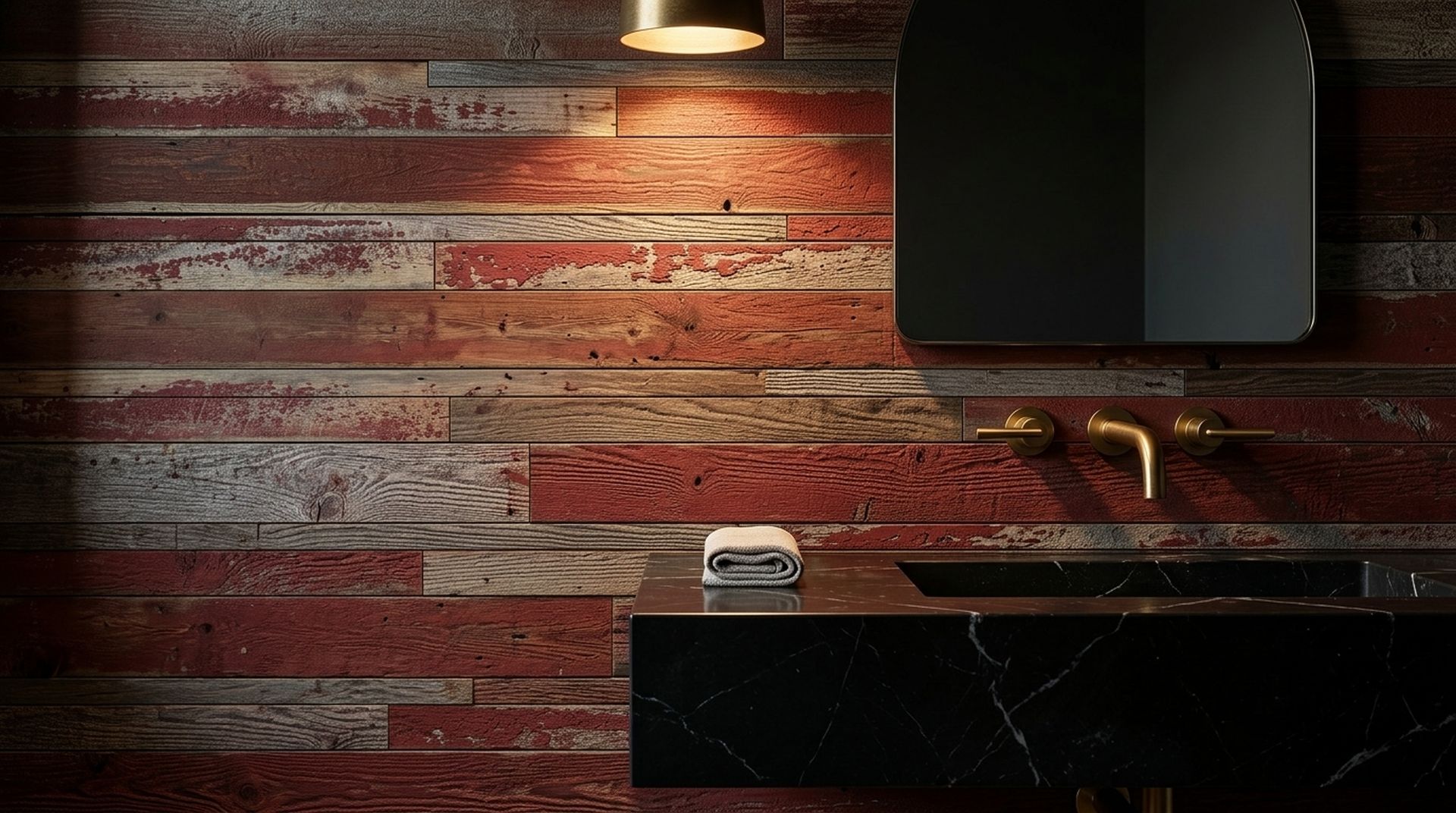
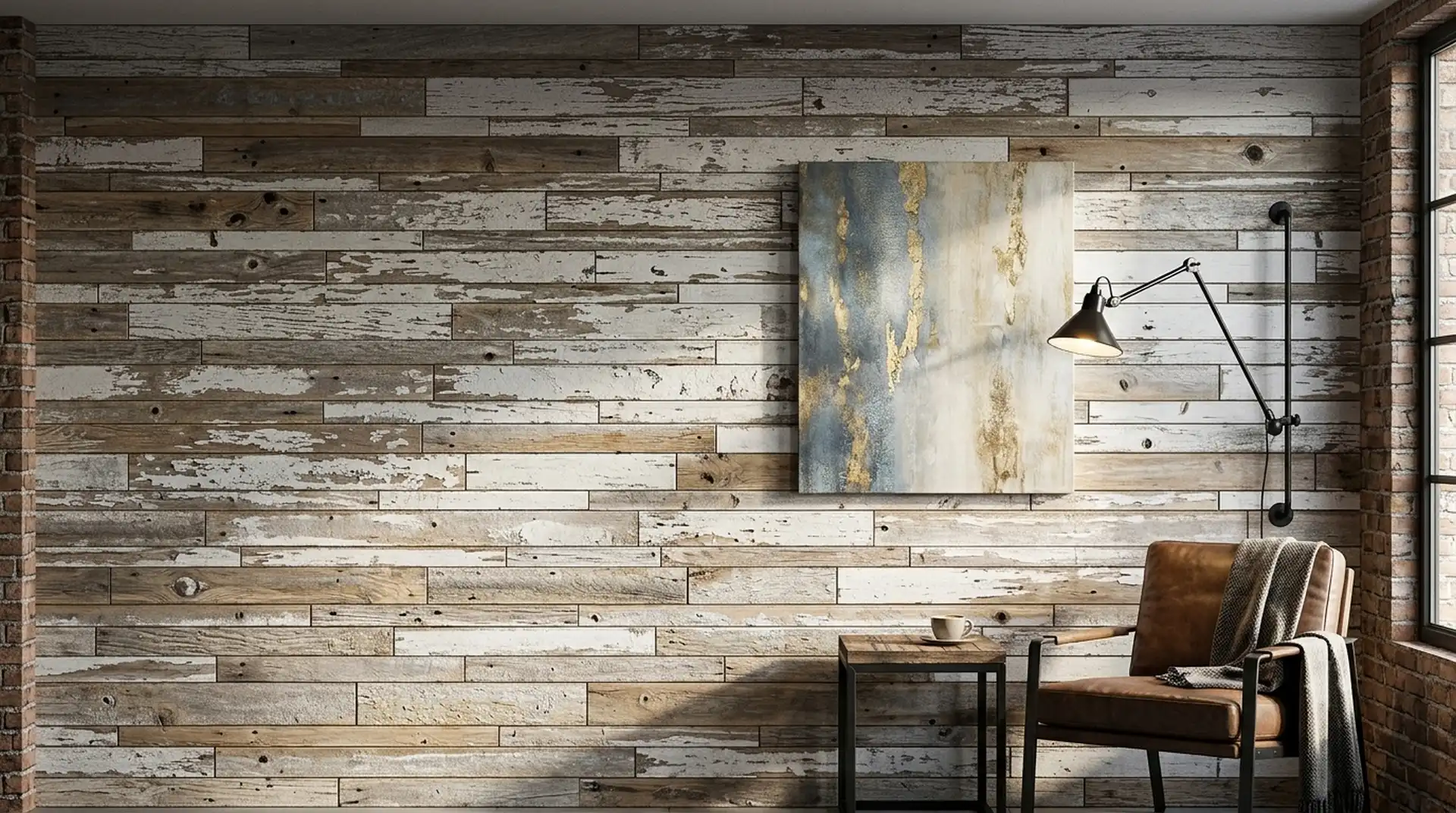
See how our reclaimed painted barn siding anchors a room, carrying the story of the Shenandoah Valley frontier into the geometry of contemporary interiors. The gallery below captures its power to make an ordinary surface unforgettable — every faded brushstroke and weathered plank a piece of ‘Living History.’
Interested in a different look? Explore the full range of our reclaimed wood wall planks to compare patinas and find your project’s perfect architectural match.
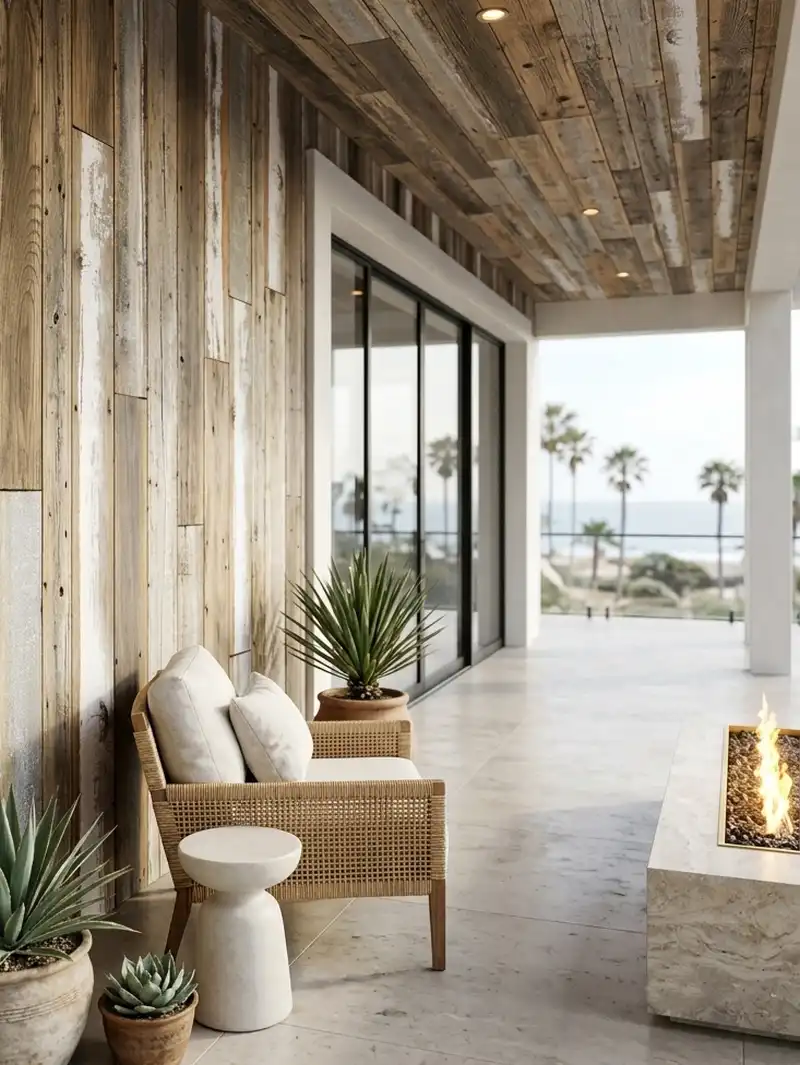
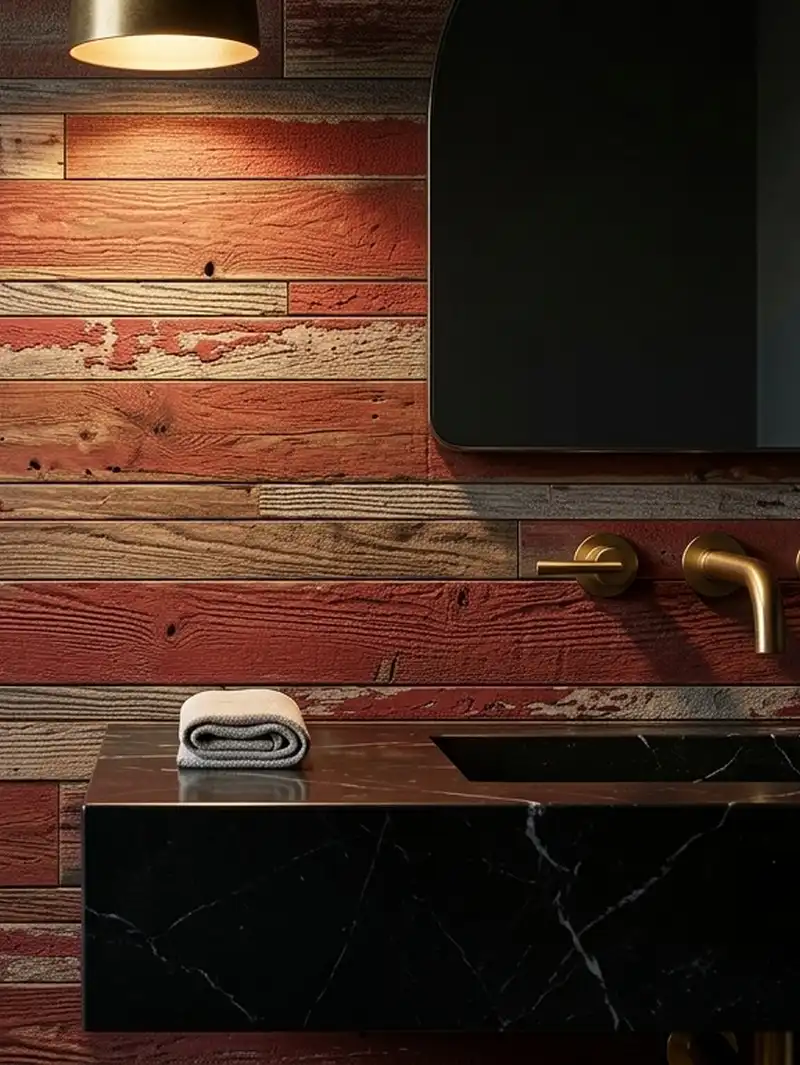
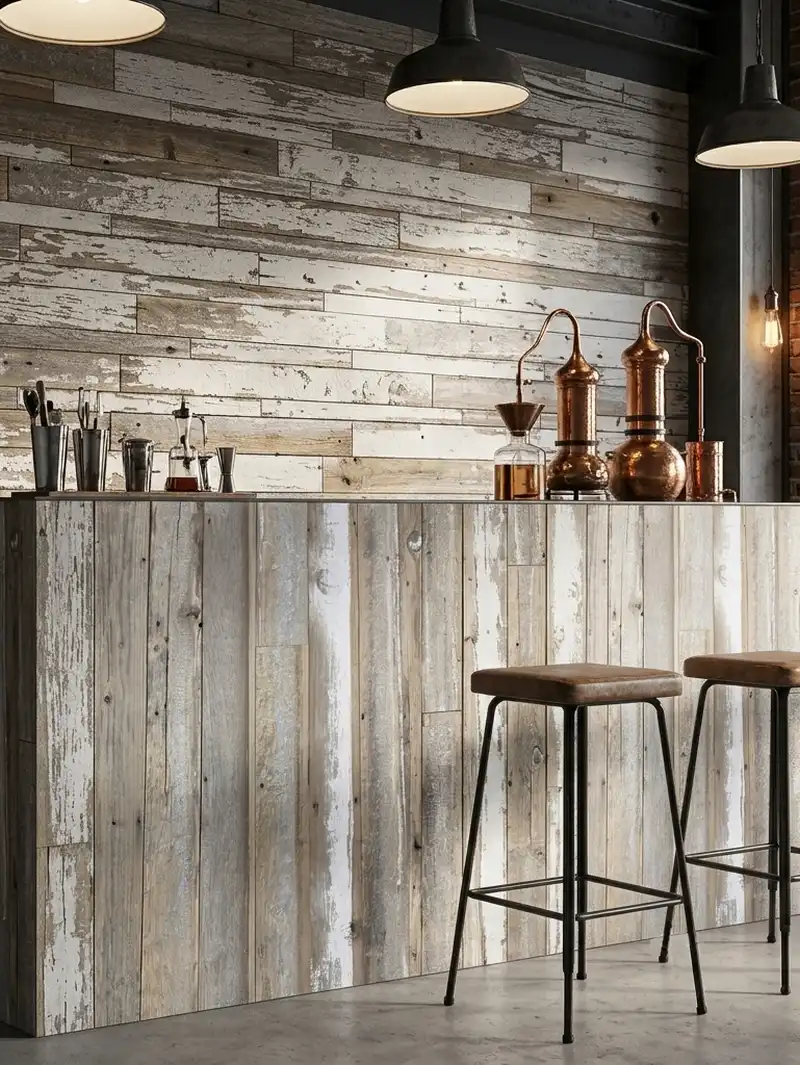
The Gallery
Weathered Warmth
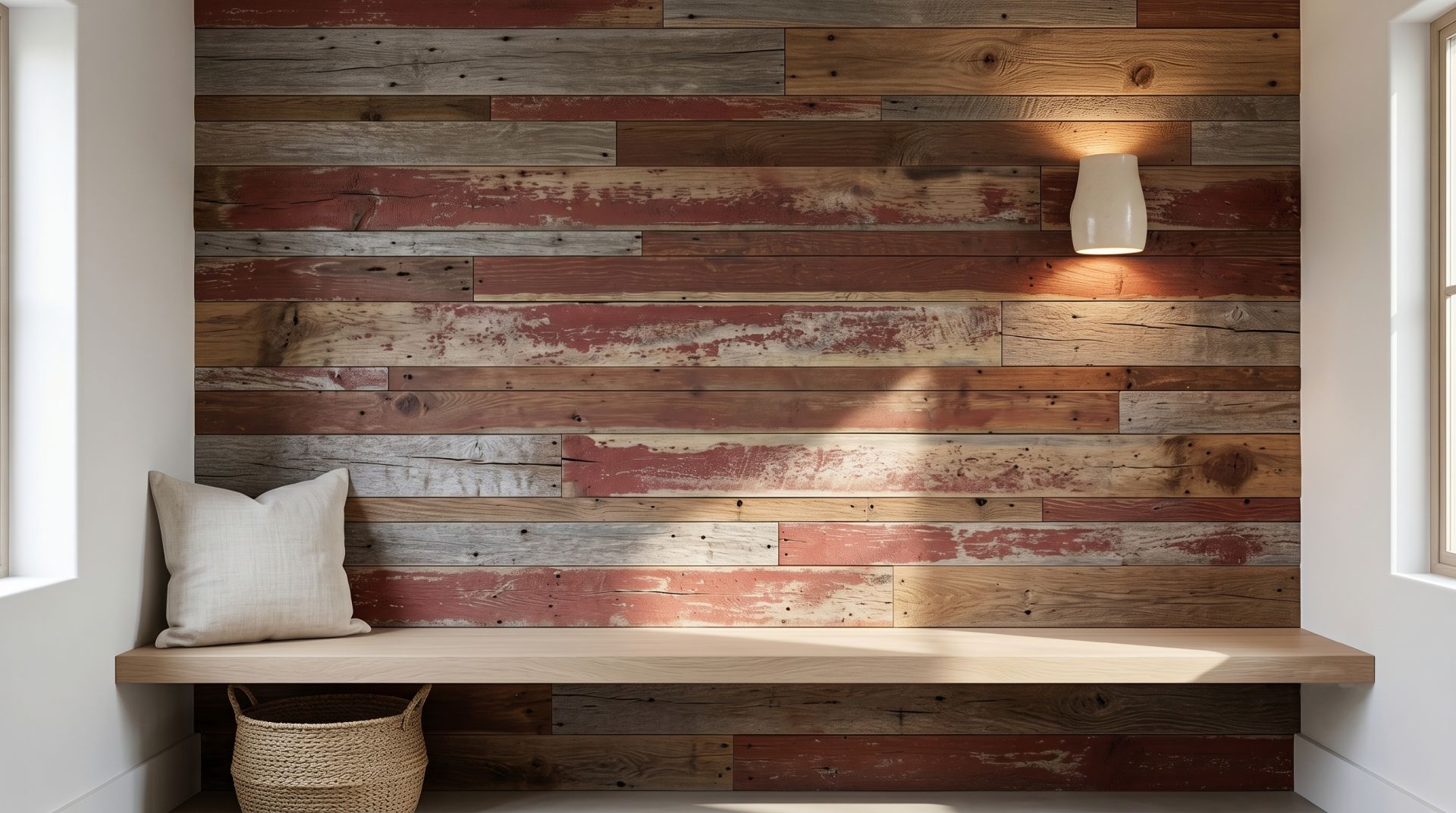
Beyond looks alone, our painted barn siding is defined by its power to root modern spaces in genuine history. Salvaged from the exteriors of century-old barns, these planks bring a room an authentic, enduring soul — original paint in grays, whitewash, and faded reds that only a hundred years of open weather can create.
If your project calls for a different look, you can explore our full range of reclaimed wood wall planks to compare textures and find the right fit for your vision.
Experience The Patina
Hold History in Your Hands.
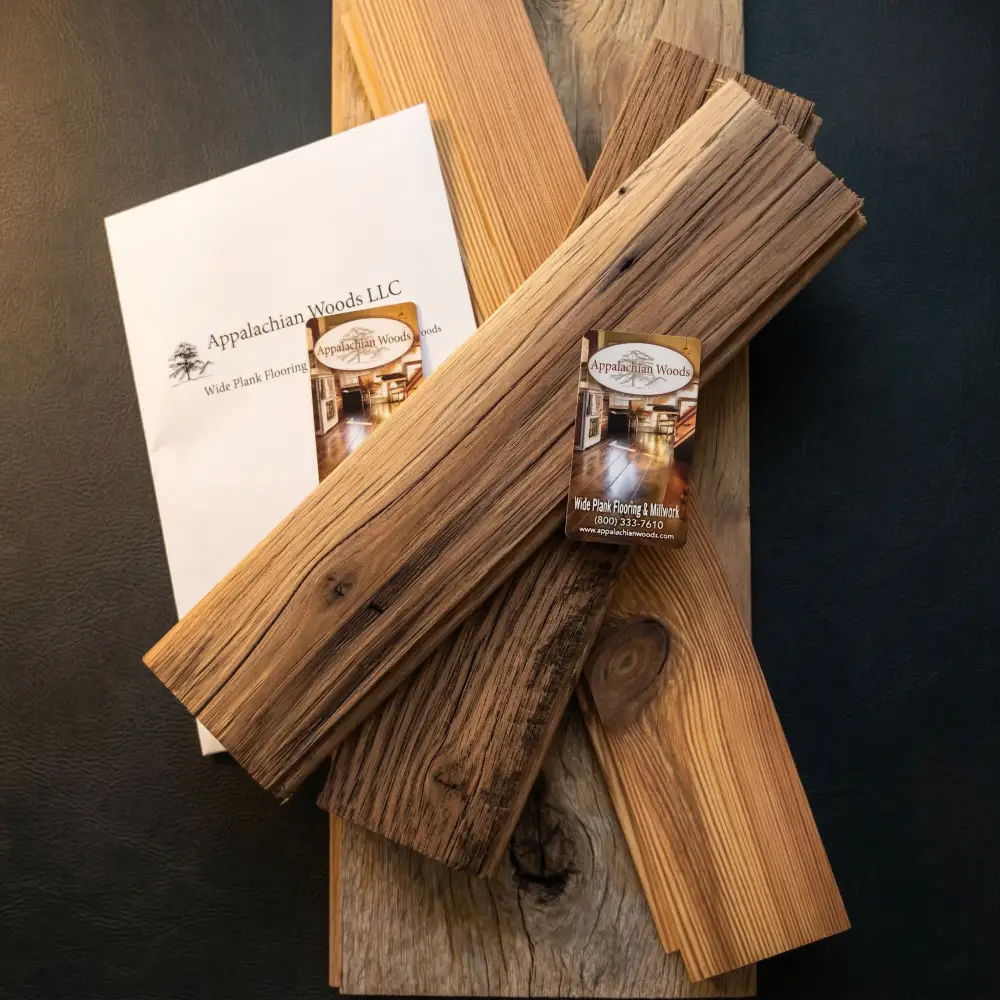
Choosing reclaimed wall planks is a tactile experience. Photographs can only tell part of the story. You need to feel the dense grain, trace the historic marks, and see how these century-old planks react to the natural light in your own home. Request a curated sample package and experience the Appalachian Woods difference firsthand.
Your $10 sample fee is fully credited toward your final custom commission.

What kind of wood is used for the Painted Barn Siding?
Our Painted Barn Siding is a curated, mixed-species tapestry salvaged from historic structures. Rather than sticking to a single species, this collection reflects the broad biological diversity of the Appalachian mountain ecosystem. In a single installation, you may find a rhythmic blend of Oak, Pine, Poplar, Ash, and Hickory—each species reacting differently to a century of mountain aging.
This “ecological mosaic” is what creates the sophisticated visual texture and chromatic variety prized in biophilic design. By preserving the original painted surfaces and the “original skin” of these diverse planks, we provide a surface that isn’t just a material choice, but a narrative-rich representation of the forest’s enduring vitality.
Can I order samples of the authentic painted barn siding for sale on this page?
Absolutely. We highly recommend ordering a sample box to see the “Brown Board” texture in your project’s specific lighting. Because our barn siding are original-face materials salvaged from century-old structures, each piece carries a unique historical signature. Ordering a sample ensures you can experience the tactile saw marks and deep earthy patina firsthand before placing your full order.
How long does it take to put together a painted barn siding order?
Every wall plank order we produce is a bespoke commission, made to order in our Virginia shop. Lead times typically range from 4 to 6 weeks, depending on the size of the project and our current shop schedule. We recommend engaging with us early in the design phase to ensure your custom wall plank order is ready the moment your job site is prepared for installation. If you’re on a rushed schedule, please reach out to us and we’ll do our best to accommodate your project schedule.
How much variation in color should I expect?
As an organic, reclaimed material, expect a rich chromatic spectrum. We grade specifically for the original painted surface, but each batch naturally includes highlights of silver-gray tones, brown tones and unique mineral stains. This natural inconsistency is what creates a sophisticated visual texture across the entire installation.
How do you ensure your reclaimed wall planks are free of active wood-boring insects?
Every plank we salvage undergoes a rigorous, high-temperature kiln-drying process that serves as a 100% effective thermal sterilization. While our Reclaimed Painted Barn Siding often feature authentic ‘worm tracks’—the beautiful, winding signatures of the wood’s century-long history—the kiln ensures that no active larvae or insects remain. This process stabilizes the wood for interior use, providing the ‘Modern Heritage’ look with the technical peace of mind required for high-end residential and hospitality environments.
How do your Reclaimed Barn Siding planks reflect a commitment to stewardship?
At Appalachian Woods, stewardship is more than a policy; it is a regenerative practice. By reclaiming 19th-century lumber from the Appalachian frontier, we extend the life of the forest’s history without the need for new-growth harvesting. This process minimizes embodied carbon and prevents historic materials from entering landfills. When you specify our wall planks, you are participating in a cycle of preservation that honors the legacy of the American barn while protecting the future of our local mountain landscapes.
Can I mount a TV, heavy artwork, or shelving to the plank wall?
Absolutely. However, for structural safety, we recommend that all heavy items be anchored through the planks and directly into the wall studs. Our 1/2″ profile provides a stable decorative surface, but the underlying framing must bear the primary load.
What are the tiny holes and tracks visible on the face of the boards?
Those are “character marks”—authentic evidence of the wood’s century-old history. These include original nail holes and “worm tracks” from the tree’s past life. These details are intentionally preserved to give the planks their tactile, storied patina.
Are the planks uniformly flat and smooth?
No. Because we prioritize keeping the “original skin” and the aged face of the lumber, the thickness can vary slightly (~1/2″ +/- 1/8″) from board to board, and even from one end of a board to another. This creates a highly tactile, rhythmic, and dimensional 3D landscape on your wall.
Do I need to remove my drywall before installing the planks?
No removal is not necessary; our wall planks can be installed directly over existing drywall, plywood, or bare studs. However, to ensure a professional “Modern Heritage” finish, we strongly recommend painting the substrate matte black before installation.
Because these planks feature authentic, rough-ripped edges and historic “through-voids”—such as original knotholes and stress cracks—a dark background is essential. This preparation ensures that the underlying wall remains invisible, allowing the natural shadow lines and storied texture of the wood to take center stage without any distracting light-colored “peek-through.
About how much does it cost to ship to my job site?
Freight costs vary depending on the size of your specific order, the exact delivery location, and current carrier fuel surcharges. As a general baseline, you can budget approximately $0.50 per square foot for Mid-Atlantic shipments, and $0.75 per square foot for West Coast deliveries.
Because freight rates fluctuate and every job site is unique, these numbers are strictly ballparks. To get a perfectly accurate shipping rate, we highly recommend calling us or filling out a Quote Request, and our team will calculate the exact logistics for your project.
Are your shipping quotes firm, or will costs change after I order?
We pride ourselves on providing firm shipping quotes upfront directly on your Sales Order, and we work hard to ensure there are no “surprise” surcharges after the fact.
On rare occasions, we may need to re-quote a delivery due to unusual circumstances—such as sudden spikes in carrier fuel surcharges or new information regarding your specific delivery site details. If this ever happens, we prioritize complete transparency and will communicate with you immediately so you are always fully informed about your project’s budget.
Does your reclaimed barn siding contain lead paint?
It’s possible. This siding carries its original paint from barns that are a century or more old, and paint from that period frequently contained lead. We don’t test our boards for lead content, so the safest approach is to assume it’s present: seal installed boards to stabilize the paint, avoid dry-sanding or scraping, and use proper dust control when cutting. Many customers use this faded painted barn siding beautifully in homes and businesses — it just calls for informed handling during installation.
Technical Specifications
Dimensions & Milling
- Widths: Random Mix of 3", 4" & 5” (Custom Options: Single Width or Other Combination)
- Thickness: ~1/2″ (+/- 1/8″)
- Length: Random 1' - 7'+
- Side Profile: Rough ripped straight on both edges
- End Profile: Flat squared ends
- Edges: Square Edge
Character & Grading
- Knots & Holes: Many sound and partially broken knots, nail/spike holes, and occasional insect scars
- Cracks: Aging stress cracks are allowed
- Color & Patina: Faded original red or white paint with natural variation of browns with some gray mixed in. Original aged patina and saw marks
- Grain: Mixed grain patterns
Performance & Installation
- Moisture Content: Kiln Dried to 8-10% or less
- Finish: Unfinished (Can be finished on-site or left unfinished)
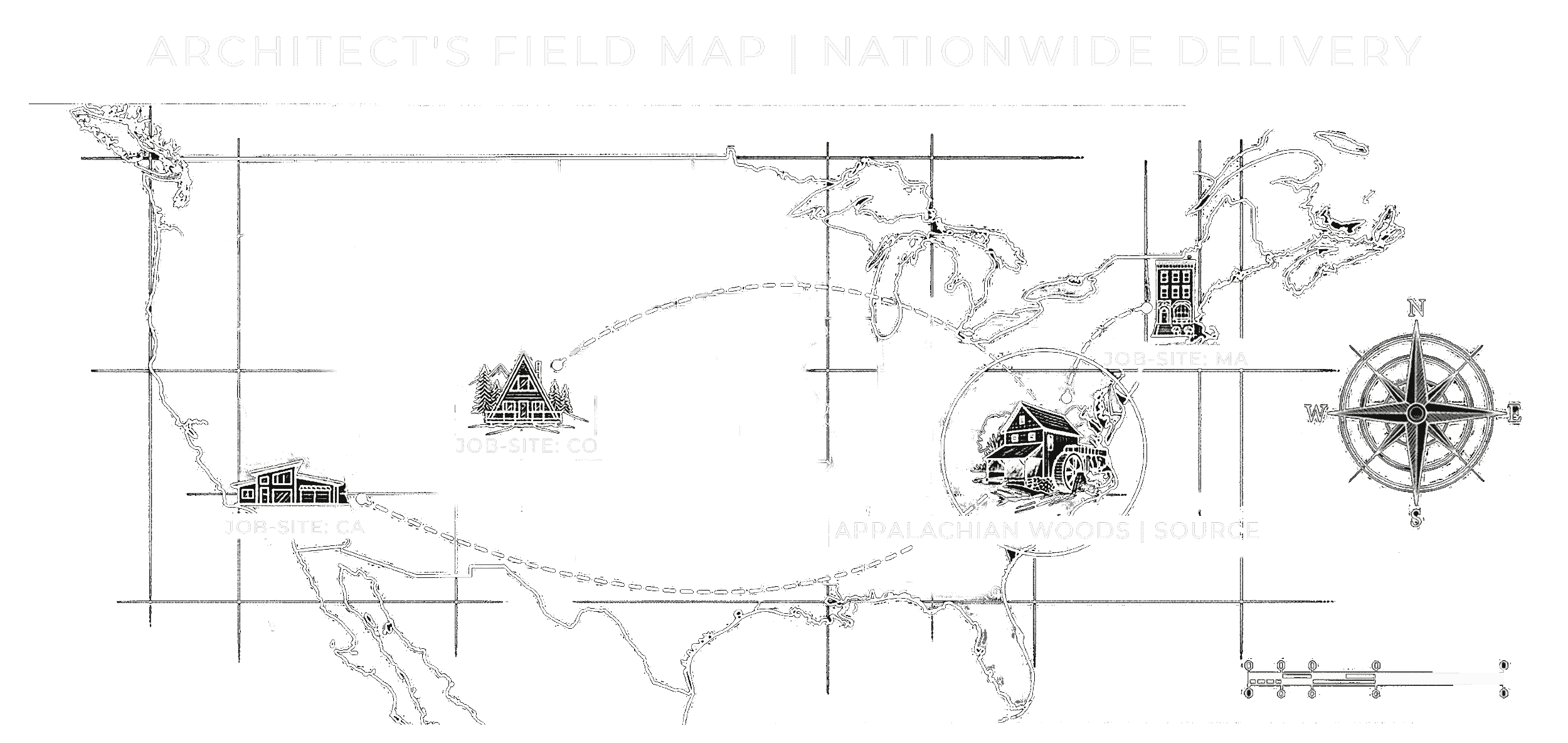
Nationwide Logistics
From Our Mill to Your Job Site
Distance is never a barrier to exceptional millwork. Whether your project is a historic brownstone in Boston or a modern retreat in the Pacific Northwest, we coordinate dedicated, fully-insured freight delivery directly to your residential or commercial job site. Every order is custom-crated by our team to ensure your order arrives in the exact pristine condition it left our mill shop.
The barn wood we received from Appalachian Woods was a perfect fit for our wall projects. It was so easy and pleasant dealing with everyone. It was a very pleasant experience. We were treated as if we had known you all our lives
Gary Keaton
Beckley, West Virginia
We get compliments every time someone comes over. Appalachian Woods was extremely easy to work with, and we would happily do business with them again.
George Kamide
Charlottesville, Virginia
Great service, very professional. Our antique barn wood was excellent quality. We love Appalachian Woods. We have used them a few times now and love their wood. They are very professional and know a lot about their products. Our upstairs looks amazing and we get many compliments!
Patty Hawley
Fairfax Station, VA
The Next Step
Request a Custom Proposal
Every wall plank order we produce is custom-milled to order. Connect with our project team to discuss your architectural specifications, room dimensions, and timeline. We will provide a comprehensive proposal including dedicated freight to your job site. Our project team typically returns custom proposals within 24 to 48 hours.