
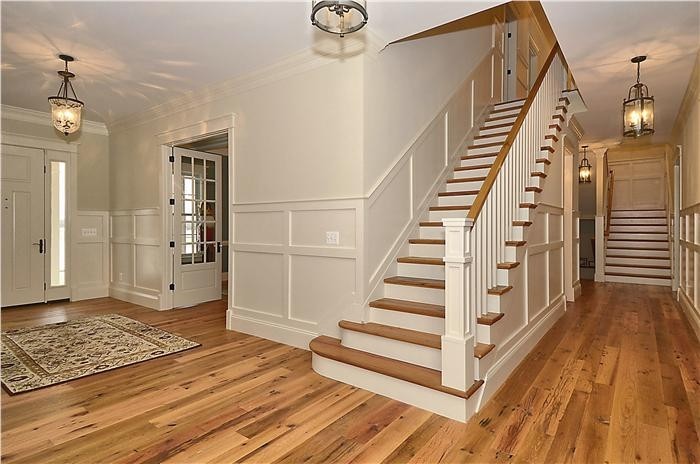
| The reason for this is clear: consumers are demanding the use of green products, but often don’t understand what green means. Being “green” is much more than just being a rapidly renewable material. To truly recognize a product’s “greenness,” one must look at its entire life cycle, from cradle to grave. It’s not a matter of simply whether raw materials can be replaced quickly, but how those materials are used when making a finished product, and what happens to them once their useful life is over.
Solid wood floors also use very few natural resources when being produced, which adds to their eco-friendliness. They use less water and energy to manufacture than other flooring alternatives, and when they reach the end of their usefulness, wood floors can be burned for fuel or recycled. To learn more about the many ecological benefits of wood floors, from cradle to grave, visit the National Wood Flooring Association’s web site at nwfa.org, and click on the “What’s New” link. The NWFA is a not-for-profit trade organization of more than 4,200 wood flooring professionals working worldwide to educate consumers, architects, designers, and builders in the uses and benefits of wood flooring. The NWFA can be contacted at 111 Chesterfield Industrial Blvd., Chesterfield, MO 63005, or at 800-422-4556 (USA), 800-848-8824 (Canada), or 636-519-9663 (international). |
Contact Information:
Communications Director
National Wood Flooring Association
636-519-9663
Home: Flooring: Green Choices: Wood Floors Are Green
Please let us prepare a free custom quote to best fit your project: Online Form or 800-333-7610